Showing posts with label dry fly fishing. Show all posts

Monday, May 1, 2017

DIY Shake Fly Floatant

I don't often fish dry flies, 
but when I do, 
I sure as heck want them to float.

It's no great secret. I am always looking for ways to save money, while still feeding the addiction. Fly fishing is such a small niche in the world of angling. With any small, specialized market, there tends to be a pretty high markup on products. The more unique the product, the more expensive it tends to be. For this reason, many fly anglers seek out inexpensive resources. Craft stores are often a fly fisherman's best friend. I always feel a bit odd wandering around the toll paint, yarn, and beads. This doesn't mean I don't fund my local fly shop, because I feel that is important too, but, where possible, I will try and save money. The funny thing is, in all my efforts to save money, I think I probably end up spending more. Oh well, at least I enjoy the effort.

DIY Shake Fly Floatant
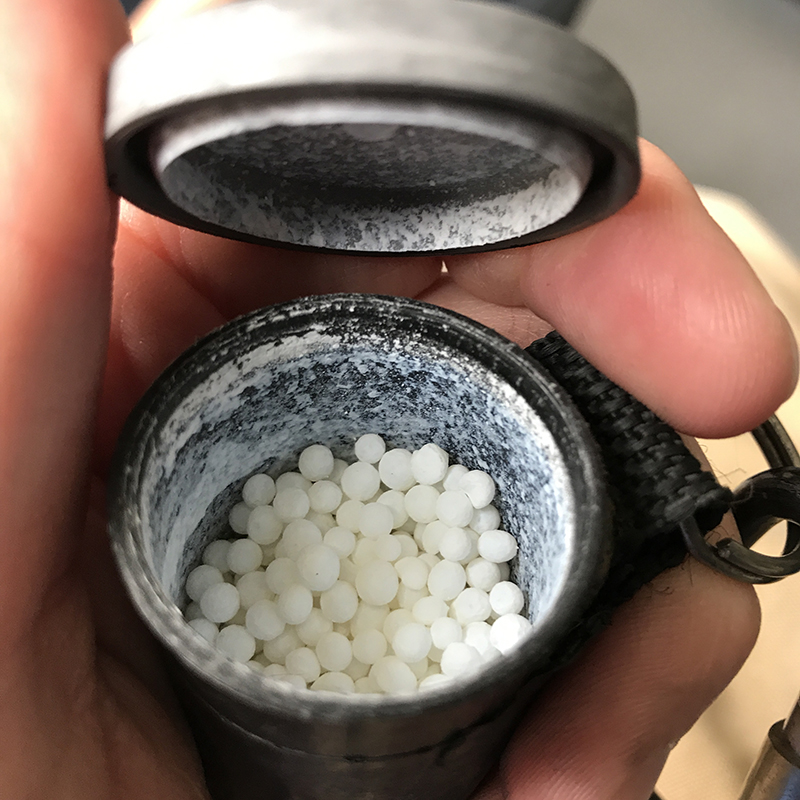


Some years ago I stumbled upon an online forum where two people were talking about purchasing the same stuff used to make Frog's Fanny, and other similar silica based powder fly floatants. I found it interesting. I ended up purchasing some of the material myself, and came up with my own little shake style floatant container. It has worked great ever since, and though I do not fish dry flies very often, when I do, I appreciate having it. For this reason, I thought I would take a moment and share the ideas.

The material is called fumed silica. It is a common additive in epoxies as a thickening agent. It is remarkably hydrophobic, and can even be dangerous if handled incorrectly. Acquiring this main ingredient is the first step in creating your own shake fly floatant. I have provided a couple links where this can be purchased. It is usually around 10-25$, which may seem expensive, but this will probably last a lifetime.

http://www.eplastics.com/m/mobile.html?item=31822
http://epoxyproducts.com/silica.html
http://www.epoxyusa.com/category_s/4.htm
Another Seller
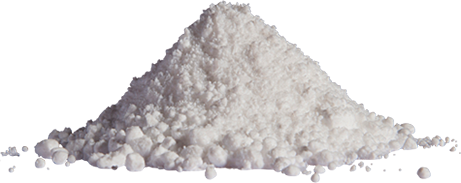
Image result for fumed silica

The fumed silica is a very fine powder, and should be handled with care. Once you are ready to open it, and start working with the material, make sure to wear a breathing mask, and protective glasses. Because of its hydrophobic nature, it can cause all kinds of problems in both lungs and eyes, which require copious amounts of moisture. Make sure to keep it away from your kids.

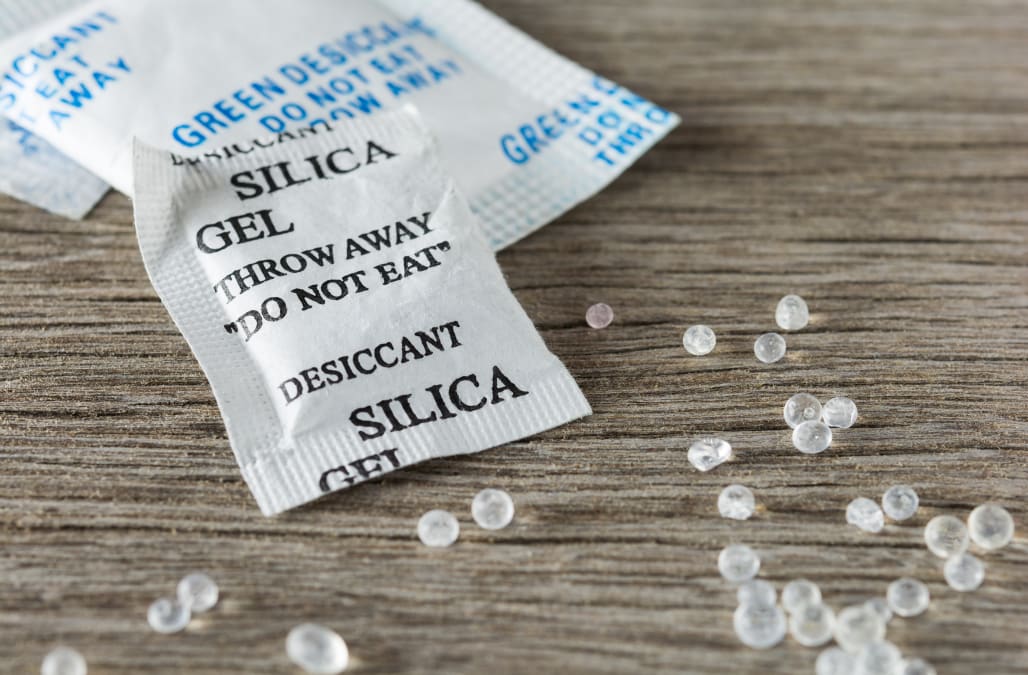
The next thing you will need is some Silica Gel (balls). This is usually easy to come by if you know where to look. When I first created my own shake fly floatant, I was working as a satellite technician for Dish Network. Electronics are often packaged with silica gel packets to keep moisture out. I grabbed a few from the many receivers I worked with. I imagine you could talk to a local store that sells electronics, and they could dig some up. Another option, if you don't want to be social, and don't mind spending money, is to purchase some online.

Amazon has them available in bulk --> Silica Gel Balls
Related image

The last thing you need is some type of container. I chose an old film canister. It was the perfect size. I had some laying around the house, but if you don't, or don't know someone who does, you can either ask your local photo processor, order some online, or use a different type of container. Non-childproof pill bottles could work as well. It would be easy to request one from your local pharmacy. Who knows, it might be worth it for the looks you get on the river. There's something fishy about an angler messing with a white powdery substance in a pill bottle out on the river.

More from Amazon --> Film Canister
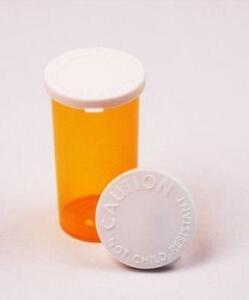
Image result for film canister
Image result for pill bottle


Once you have acquired your fumed silica, your silica gel (balls), and a container, all that is left to do is fill your container around half to two thirds full of the silica balls. Then, carefully transfer the fumed silica into the container. I used a plastic spoon for this part. It also doesn't hurt to wear rubber gloves, since the powder can dry your hands out quite well. Once you have a couple spoonfuls in your container, place the lid on and shake it up. Then, slowly remove the lid, place some more fumed silica in the container, and repeat the previous step. Once you are satisfied with the amount you have (I prefer a decent space open so it shakes well) you are good to go.

When using, simply place your fly (attached to your line) in the container, hold the lid on with your finger, and shake it around. This allows the silica balls to force the fumed silica into your fly. Then, remove your fly, place the cap back on your floatant and resume fishing. It is stupid simple, but it has saved me money. I'm not sure I'll have to ever by this powdered floatant again during my lifetime. When necessary, I simply add more fumed silica to the container. In between fillings, make sure to save your silica in a safe and dry location. It will suck up moisture from the air, and become far less effective if it is not stored in a sealed container.

4+ years of use.


One last thing to mention. I used tape to attach a key ring to the container. I then attached it to a small carabiner. You could probably come up with a better system, but this redneck setup works for me for now. Hopefully this is helpful, and good luck if you give it a try. And, as always, if you have some recommendations to add, feel free to do so in the comments.


Monday, May 19, 2014

Break Away

"The unexamined life is not worth living."
-Socrates (according to Plato)

Why is it so hard to break away from some patterns of living? Sometimes we get stuck in a rut and form a white-knuckle death grip on habits and patterns.  At times I find myself just existing rather than living a deliberate life. I think we all fight the monotony of the everyday grind.  Some say that life is about doing what you want to do. I think there is some truth to that, but at the heart of that ideal is the temptation for the person to live a life focused inward.  Being selfish or living a life miserably for someone else's sake isn't really living either, there is a balance.  Doing what has to be done is a necessary part of life, but there needs to be purpose, a plan, and a deliberate (examined) approach to decisions.  Anyone with small children understands that life is not always fun, entertainment, and personal time.  Personally, all the selfish "what about me?" thoughts melt away (and they are there every now and then) with one smile from my 2 year old, with one squishy hug from my 4 year old, or with one "Dad, I love you" from my 6 year old.  There is something unbelievably satisfying about pulling into the driveway after work and having at least two of my little boys run out the front door screaming "DADDY!"

Concerning selfishness, I'm not necessarily sure it's having kids that makes all the difference, though I think it can make it much easier to forget yourself (I highly recommend the experience for lasting happiness).  Having children demands sacrifice, but if you do not require children to be a better giver and a more compassionate person, than you my friend are far ahead of this selfish old codger and are headed in the right direction.  Thank goodness for moments, people, and experiences that jolt me and shake me out of the inward patterns of living.  Sometimes the blinders are slowly removed from our eyes, one small portion at a time. Other times they are ripped away, but either way we are helped and we can see there is so much more to life than our daily routines.  It is hard to do, but when I break away from the plain, selfish, and unexamined and try to focus on others, I find I am truly happy, not always entertained, but truly happy.

_____________________________________________________________

Lately I have been lucky to have even one day every other week to get out on the water.  You would think I'd be more guarded about those precious days and where I chose to spend them since they have grown much fewer.  On those free days I would normally opt for chasing large trout in water that is not kid-friendly for wading, and often requires a decent hike. I'm not sure what happened to make me let go, but something has helped me let go and break away. Something opened up my mind and softened my heart, and spending my free days with my family has been far more important than chasing large healthy trout. I'm sure my fishing mania will return to some degree (it always does), but taking these extra days with my wife and children has been exactly what we all needed. (This makes it sound like I am never with my family.  We actually spend quite a bit of time together, but I think this is all about having more quality time.)

Birch Creek

The day started with a pretty laid back feeling, something I'm not used to for a day dedicated to fishing.  About 10 o'clock the van was all loaded with our gear, and Will and I were on the road. After two trips back home for forgotten knickknacks we picked up Mark. This was to be Mark's second time fly fishing and so we planned a day trip for a small creek full of hungry little trout.

Birch Creek is an excellent location for beginners. Just 20 minutes outside of Mud Lake, Idaho it has 15 miles of easily accessible water.  It is very wade-able, holds many smaller wild rainbows and brook trout up high, and is heavily stocked with planters down lower in the campground stretch.  It fishes about the same year round, and isn't touched by the runoff.  It really is a neat place, and one of the reasons I grew to love fishing so much.

It's been years since I have really fished it, since I usually opt for a bigger quarry, but it felt great heading back to a place I consider my homewaters. Sometimes it is easy to forget that these kinds of fisheries are what generate a love for the sport.  The drive up through the desert is enjoyable this time of year since it is in that small window where much of the desert is green with new life.


After arriving, we geared up and tied on big royal wulf patterns. Will was excited to get on the water, despite the chilly breeze.


Will got hooked up with a couple small nymphs and a thingamabobber since it was so windy.  I pointed to a small barbwire fence upstream a bit and encouraged will to go try by it while I helped Mark figure things out.  Not but a minute after he started casting Will was yelling "Hey Dad, I got one!" I went and helped him release the little rainbow and returned to helping Mark. Will kept catching fish all by himself throughout the day.  I was sure proud of him.  You don't hear of too many 6 year olds who can hold their own with a fly rod.  I did get hooked twice and spent a decent amount of time untangling knots and line from bushes, but I'll trade those hazards anytime for a smile like the one on this kids face.

First of the day.


One of the biggest treats for the day happened toward the end. We had been fishing up higher for the smaller, wild trout, so we decided to go downstream and scope out the campground to see if there were any holdover planters.  My grandma loves fish, so we wanted to bring a few home for her.  After wading a short distance toward the top of the campground I couldn't believe what I thought I was seeing. Stoneflies (salmonflies) were hatching!  I was blown away!  I had no idea Birch Creek, a tiny creek in the middle of nowhere, had stoneflies.  They were everywhere, so I quickly tied on one of the three patterns I happened to have with me and indeed the fish were keyed in on them! The fish were small, but the takes were remarkably aggressive.
 

We wandered around, looked at the big bugs hatching, fished here and there, kept a small handful of fish, and by that time the light was failing. Will begged to make some more casts so I let him take my rod for a bit while I cleaned the fish. We then loaded up the car, munched down some cold sweet watermelon slices, and began the trek back home. 

Stomach contents: a few adults and a bunch of nymphs.

It was an amazing day.  I love watching my son grow to love fishing.  I had to laugh when he didn't want to stop.  I caught a glimpse of myself at his age, with all the happiness it brought me, and thought if this is what it's like to break away, I need to do it a whole lot more.


Sunday, September 29, 2013

Gear Review: RIO Perception Fly Line (WF5F)

One of RIO's great claims to fame is their unique flex tippets.  When I think of RIO Products, that is one of the first things that comes to my mind.  Enter RIO's new Perception fly line.  A no-stretch, no-more-missing-fish, no-fooling fly line.  The idea took me a while to digest, considering RIO is a company famous for their line "stretch."  The concept has merit, and I was interested to see if it would make any difference in the field, or if the hype and claims in the advertising were a stretch themselves.

RIO not only claims that this new line lacks stretch, but that it still includes all the existing RIO technology used on their other lines. They say this results in more sensitivity or "perception," a lessened reaction time when setting the hook, and better casting.  RIO produced a short video explaining the features.  It's a bit goofy, but gets their point across.  I'll have to admit that I was skeptical that there would be any significant difference from previous lines.  I was pleasantly surprised.

Dry Flying:  This line has called my reel's spool home for the past four months and has been through considerable use.  The first test was on a family outing to a medium sized river, full of planter bows and small wild browns.  The first thing I noticed was how well the line casted.  We stuck on a small orange stimulator and immediately started catching fish.

Casting to eager planters gave me a good opportunity to test the dry fly capabilities of the line.  I had plenty of chances to try different approaches.  The line is so responsive that if the angler doesn't adjust their approach, fish will still be missed.  What do I mean by that?  A regular line with some stretch is forgiving on a overly aggressive hookset, but on the takes that require a faster response a stretchy line falls short.  The lesson I learned quickly was that I needed to adjust my game a bit.  It was nice to have more options.

Fish were everywhere in this family friendly river so I decided to try some long distance hook sets.  I bombed line clear to the other bank of the river.  On some I would do an immediate mend, but on others I would let a large bow happen in the line.  On both instances I was hooking fish.

Overall, from this first experience with the line I was impressed.  The hookup and landing rates were quite good, especially for fishing a small stimulator (they have those goofy turned in hooks I'm not a big fan of).  I was excited to do more with the line.

The next big testing ground was a whole day of fishing for wild cutthroat on the Yellowstone River.  These were fish that see very few artificial offerings.  It was a blast and we each managed over a hundred fish easily.  Midway through the day I took my buddy's rod to throw his line for a bit to see the difference.  Instantly it was apparent that the Perception casted better.  It FELT better, and I hadn't realized how used to the extra responsiveness I had become.  My buddy even commented on how much better it fished and casted.  We were throwing big foam dries most of the day but at the end of the day I couldn't resist throwing a streamer just a bit.  It worked great, though I can't say I felt much advantage over any other line for that purpose.  (To be honest I prefer sinking lines for streamers.)


The line goes from tan to camo (dark green) to green (bright green).  This multicolored line is meant to help the angler track the line during a drift.  It did in fact help me know how much line I had out and gave me the edge when mending, though I prefer a more natural color on the head section.  It is trickier to track the line, but I think it spooks less fish that way.  To compensate for the bright green tip section I simply lengthened my leaders, which was no big deal, and did just as well.  RIO provides another color scheme that is tipped in the Camo (dark green) color.  I think I would choose that one next time around.


Nymphing:  When nymphing, the colors in the line were quite pleasant.  It roll casted with ease and the colors made it easy to track the line and mend.  The lack of stretch in the line made for a quicker reaction time to a sunken indicator.  The bright tipsection of line also made it easy to fish without an indicator. The line nymphed remarkably well and I had no trouble in laying out a bit more weight with a clunky nymph setup.


Mousing:  When I first got the line, mousing was not something I had in mind, but I recently had the thought to use my 5wt for throwing mice, while I kept my 8wt rigged with a streamer for our night outings.  It just so happened that my 5wt was sporting the Perception line, which I am now grateful it was.

Mousing in the dark of night is a different experience.  The hookset is in response to sound, rather than feeling the take or seeing an indicator go down.  When retrieving the line you hear a SPLASH/SLURP sound and in most cases there is not any immediate tension in the line.  This means you need to set once you hear the take.

So how does a line that shines in it's extra perception/sense help when you can't feel the take?  It's in the improved reaction time.  The swimming retrieval motion you make when fishing a mouse puts a lot of slack in the line, so any advantage you can gain on the take makes a big difference.  The pictures show how effective a no stretch line can be on those kinds of takes.


Summary:  It has been a pleasure fishing with this line.  It will be difficult trying to fish another floating line now that I'm so accustomed to a no-stretch line.  I would not be surprised to see other companies following with their own rendition of a "no-stretch" line.

Pros:
-Smooth and responsive cast
-Floats well
-Mends well
-Easy to track on the drift (coloring)
-Increased response on the hookset


Cons:
-Learning curve with no stretch (on hooksets)
-Coloring (could spook fish easier)

RIO's Perception Fly Line retails for $89.95 and comes in two different color schemes, (Green/Camo/Tan) and (Camo/Tan/Grey).  If you're in the market for a new floating line I would not hesitate to recommend it.


*Disclaimer:

The reviews at Living Fly Legacy are my honest opinion. Often when offered to give a review, if the assessment of the product is more negative than positive, it is not published and the review is kept private between the provider of the product and myself. Living Fly Legacy is not sponsored by or associated with any of the stated companies and is accepting no compensation, monetary or otherwise, in exchange for this review. My independent status may change in the future, but as of the date of this publication, no relationship other than described above has been pursued or established.

Wednesday, August 7, 2013

Yellowstone Trip

Yellowstone was officially made into a national park on March 1, 1872 by President Ulysses S. Grant.  So many people have benefited and continue to benefit from that decision.  For the adventurous wanderer there are places scattered throughout the park that still hold a feeling as if no one has been there before.

Day 1 - 7 Mile Hole: Yellowstone River

We had high hopes for the beautiful cutthroat trout Brent kept telling us about.  He told us last time he fished it he stopped counting, the fish were so plentiful and eager.  It was to be dry fly fishing with big bugs.  Stone flies, both regular and golden, are coming off into the end of July.  On top of the stones, there are plenty of hoppers.  It's a dry fly paradise.  Foam, or lots of hair, is a must, unless you don't mind reapplying floatant every other fish.  It's also a must with the turbulent water along the river banks.

Starting up the trail

It is good fishing for a reason.  The hike, for lack of a better word, sucks.  It's a 5.5 mile hike one way.  The first 3.5 miles in are relatively easy going.  There are a few slight ups and downs, and the trail follows the "Grand Canyon of Yellowstone," presenting some beautiful views along the way.  It is when you hit roughly the 3.5-4 mile mark that things get hairy.  The next mile and a half is why some locals call it "7 mile hell."

Grand Canyon of Yellowstone

The trail then drops rapidly down a 1300' descent, full of switchbacks, loose dirt with gravel, and passes between thermal vents.  The hike down and the hike up both have their pros and cons.  We each slipped more than once on the way down, with some pretty epic falls.  A good set of trekking poles would have been a nice addition.


Once down in the canyon you are presented with spectacular views both up and down river.  The river was lower this year than it has been in times past.  This made for a lot of turbulent water, but also made it so we could trek down river farther than is usually accessible.  Upstream isn't even an option with a steep loose dirt wall you would have to be insane to venture along.  Going downstream is tough hiking because of the steep bank and loose rock, but the fishing got even better if that can be believed.


The new RIO Perception line is killer.

The day was filled with beautiful cutthroat trout that averaged 12-16 inches.  The largest we probably picked up was roughly 18 or 19".  Almost every spot that looked good held at least one fish, if not multiple.  The stone flies were still out, along with some goldens, though it was obvious they were winding down.  I can't even imagine what it was like in the middle of that hatch.


If you ever decide to make the trip, be very careful.  The river is full of unpredictable hydraulics.  Brent waded a little bit right on the banks, but Shane and I kept it dry as much as possible.  There's very little, if any, need to wade.  I imagine on a higher water year there may be more need if someone wanted to access further downstream, but am not sure that's even a possibility with higher water.


Trying for an underwater shot


It is certainly bear and wolf country.  The wild raspberries along the river bank were a treat, but made us all the more wary of unwanted visitors.  In fact, after we went down river we were pretty certain we happened upon a couple wolf dens.  Fortunately the occupants were out for the day.  We had bear bells and pepper spray on the hip just in case.  Never venture into this country without protection.  It is rugged and bad things can happen really quick.  For that matter, I wouldn't make the journey with any less than three people.


The fishing was so phenomenal that even the foam concoctions took a beating.  This stonefly pattern had barred legs and check out that foam.


Apparently this marmot, I suppose we could call him Chuck, is a grumpy resident.  He was there when Brent made the trip last year too.  He kept an eye on us.  It was fun to watch him watching us.  My favorite part was when he would lay down on his stomach, like a sunbather, all the while still staring at us to make sure we weren't up to no good.


We had all caught enough fish to be considered gluttonous.  Over 100 per person is an insane day of fishing.  I even threw a streamer for a bit with fantastic results.  With sore arms and shoulders we began the journey back.  The hike out was rough, and it was such a relief to reach the top of the canyon.  A storm rolled in just as we started the level part of the hike back.  Rain, thunder, and lightening ushered us back to the truck.  Little did we know it was a premonition of the rest of our trip.  Once to the truck we headed to the Roosevelt Lodge for some dinner.  The food was amazing and we would highly recommend it.


Day 2 - Tower Fall: Yellowstone River

We were beat.  We decided to sleep in the second day, and head over to Parks' Fly Shop for some intel on where to fish when the rain comes and everything washes out, since it had been raining into the night.  They were very helpful, but left us with somewhat low expectations for the day.  We had initially planned on hitting Slough Creek, but it was too late in the day to really consider the 5 mile hike.  Brent decided to stay at the camper for the day and try to catch up on some work.

Shane being Shane

So Shane and I took the truck and decided to try the Yellowstone again, but where Tower Creek dumps in.  It's an extremely easy/short hike (1/2mile) from the parking lot down to the river.  First thing we did was cross the creek and head down river for a bit.  It was deep water with large boulders.  I decided to throw a streamer in hopes of a larger fish, and Shane kept at the dry fly.  I kept getting short, soft strikes from multiple fish, but with very few hookups.  Shane had a few looks, but very little action outside of that.  He headed back upstream (you can't go very far down stream before you run into impassible banks and big whitewater) and I kept trying to hook one of the many decent fish that would chase the streamer.  After a while I decided to follow Shane up river, so I B-lined it to catch up to him, passing all the people playing in the water right below the trail's end.  I threw a couple times on the way up to eddies behind the few rocks there were upstream, but without even a chase.  Once I reached Shane he said he had only picked up one fish.

It was apparent that this section, with it's easy access, had a lot of pressure.  As we headed up just a bit more we ran into a grizzled, but nice older gentleman heading back.  He informed us that a bear had been sighted a bit further up and that there were no less than a dozen anglers up ahead of us.  He had headed up early in the morning, to be the first on the water, and had hiked in a ways before fishing.  It was no wonder we weren't having much luck, we were fishing sloppy dozen-ths.

One of a few nearby bear tracks

We fished around the bend a bit.  With the streamer I was able to pick up at least a dozen fish, in the faster water that most of the others hadn't covered.  Shane stuck it out with the dry, but with little success.  A storm began rolling in and we decided to call it a day.

Headed back

As we finally (there's was road construction between Tower Fall and the Roosevelt Lodge) pulled out of the parking lot, the clouds broke open and it began to pour.  We had initially planned on staying and fishing somewhere in the morning for a little while before heading home, but we began rethinking this plan on the way back to camp.


The Gardiner River was full-blown chocolate milk.  This sealed the deal.  We decided to head home that night despite our already paid for reservation at the RV park.


As we discussed it we decided to camp the last night somewhere closer to home and try fishing there for a bit in the morning.  So we loaded up and headed that direction.


During the whole trip we only saw a handful of animals, none of which were buffalo.  That had to be the first time I've been in the park without seeing a buffalo.


We pulled up to the ranch just as the sun was setting and a storm was passing over.  We fished for an hour without any luck.  The ranch is a tricky place when there aren't any hatches and the terrestrials have all gone to bed.


After an interesting nights rest, with some critter scraping the side of the camper, we woke up and headed to another spot.  We caught a couple, but it was nothing noteworthy.

It was one of those trips where you learn a lot.  Next year we'll know what things to prepare and plan for.  The first day on the Yellowstone is what made the trip.  We'll definitely be back.